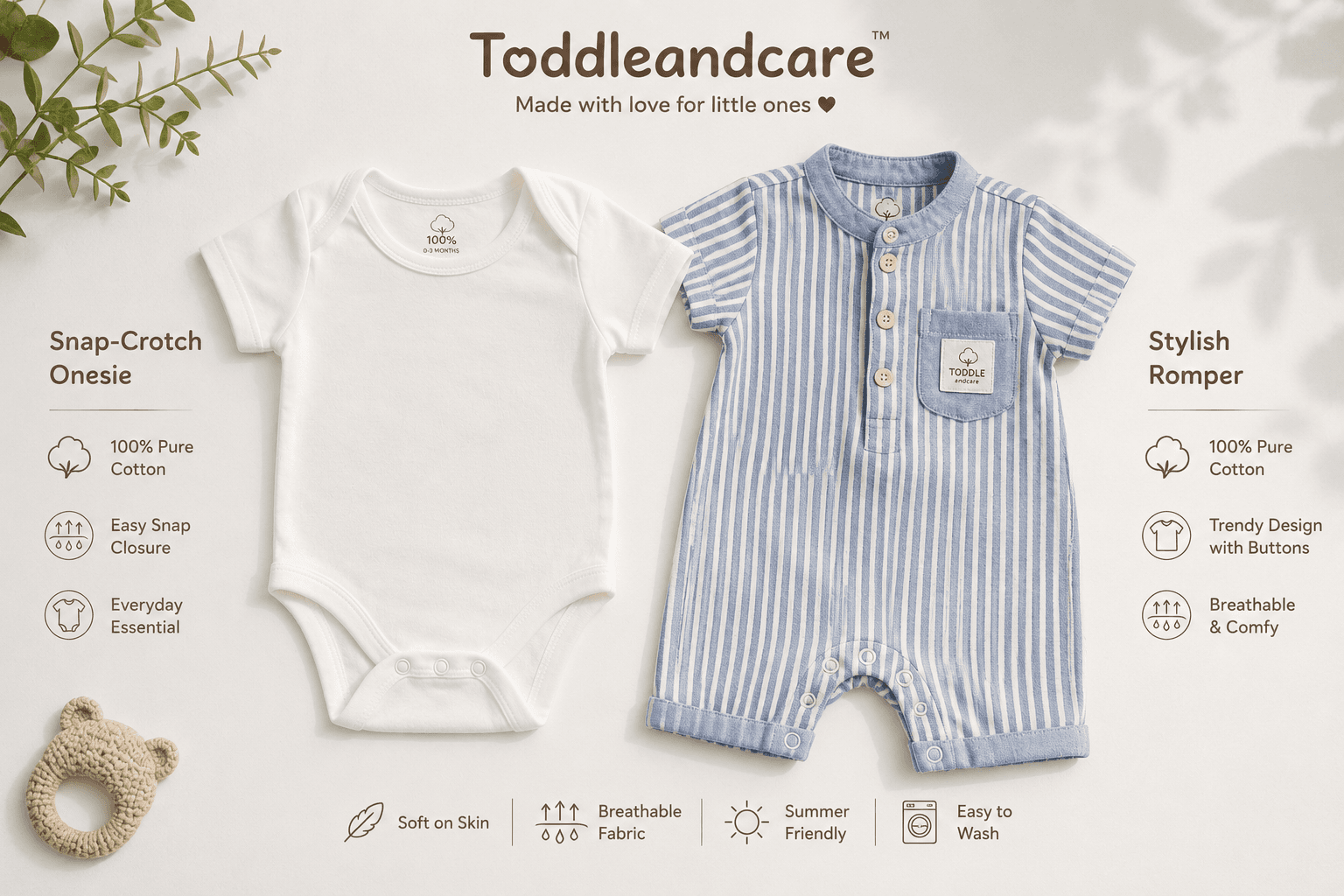
Baby clothing names can overlap between retailers. In many shops, a onesie means a bodysuit that fastens at the crotch, while a romper is often a one-piece outfit with short or long legs. Always look at the actual product photos and description because naming is not completely standardised.
When a bodysuit can be useful
Bodysuits sit close to the body and can work as a base layer under trousers, dungarees or other outfits. Crotch snaps can make diaper changes easier, while the neckline should open comfortably without pulling roughly over the baby's head.
When a romper can be useful
Rompers combine a top and bottom in one garment. Depending on the cut, they can be useful as a simple daytime outfit. Check leg openings, torso length, closure placement and whether the fabric suits the weather.
Compare before buying
- Look at whether the garment has legs and sleeves.
- Check closure placement and diaper access.
- Compare the size chart for the exact item.
- Check fibre composition and washing instructions.
Which one should you choose?
There is no universal winner. A bodysuit may work well as a base layer; a romper may be convenient as a complete outfit. Let the weather, your baby's comfort and the product's construction guide the decision.