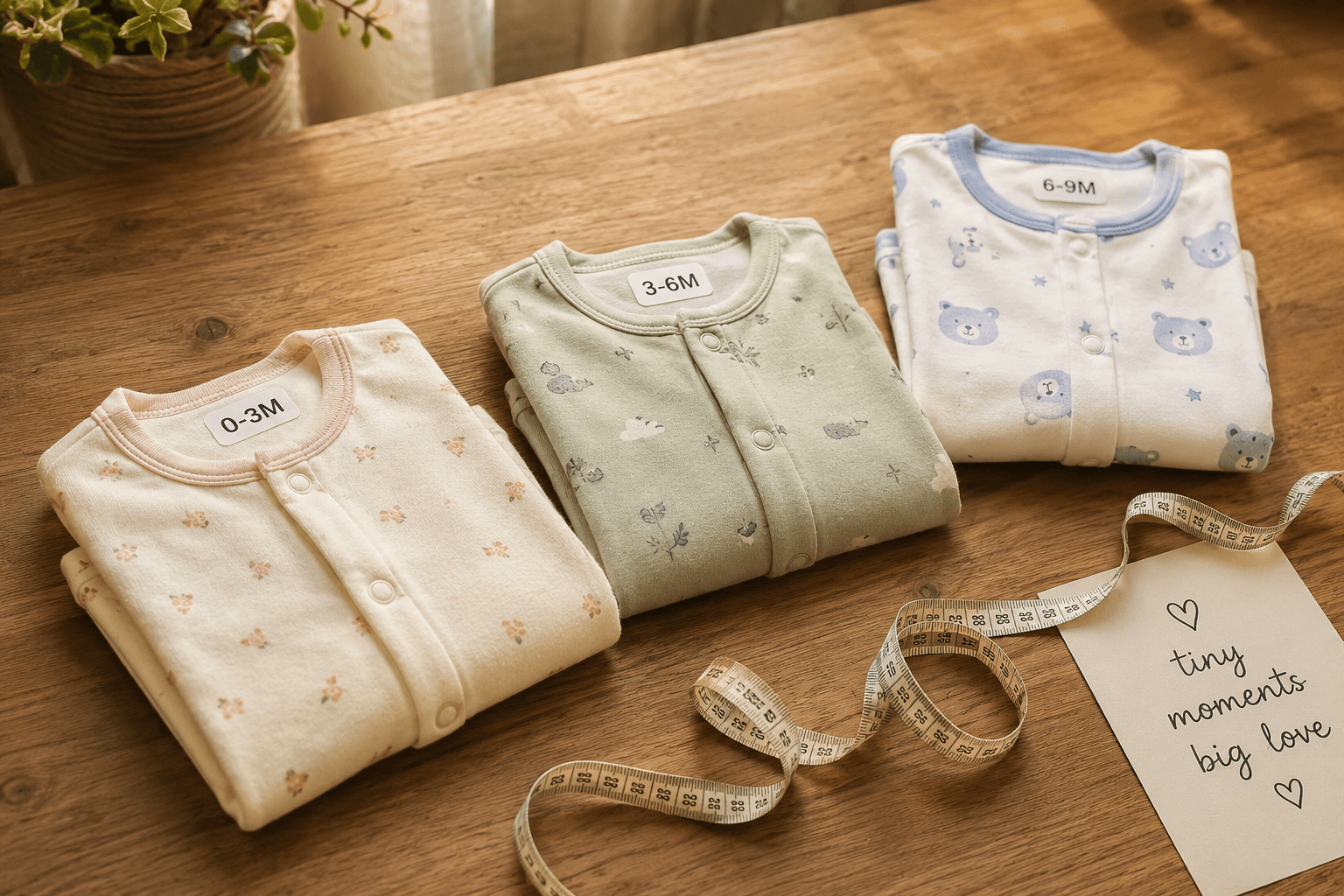
Choosing a size can be one of the most confusing parts of buying baby clothes online. Two babies of the same age can have different heights, weights and proportions, and sizing can vary between brands. Use age labels as a guide—not as a guarantee of fit.
1. Check the brand's size chart first
Look for the measurements the chart is based on, such as height, chest or weight. Compare your child's current measurements with that chart rather than relying on age alone. If a product page provides a garment measurement, remember that it is not always the same as the child's body measurement.
2. Think about the garment style
A bodysuit, a relaxed romper and a layered winter outfit can fit differently even when their labels show the same age range. For one-piece garments, check torso length and room around the diaper. For trousers, check waist comfort and leg length.
3. Leave comfortable room—not excessive fabric
Clothes should allow your baby to move, stretch and sit comfortably without tight seams or pressure around the neck, waist or legs. Very oversized clothes can also get in the way during play, so choosing the next size up is not automatically the best answer.
4. Consider the season and layers
If you plan to add a layer underneath, account for that when checking fit. Avoid bulky layers under a car-seat harness; follow the car-seat manufacturer's instructions and use appropriate thin layers.
5. Check the return and exchange policy
Before placing an order, read the seller's current return, exchange and shipping terms. Keep product tags and packaging until you are confident about the fit, subject to the seller's policy.
Quick checklist before ordering
- Measure your child recently.
- Compare measurements with the exact product's size chart.
- Check fabric composition, closures and care instructions.
- Read the current exchange policy.
Remember: there is no single universal size chart for every baby clothing brand. The product's own measurements are the most useful guide.