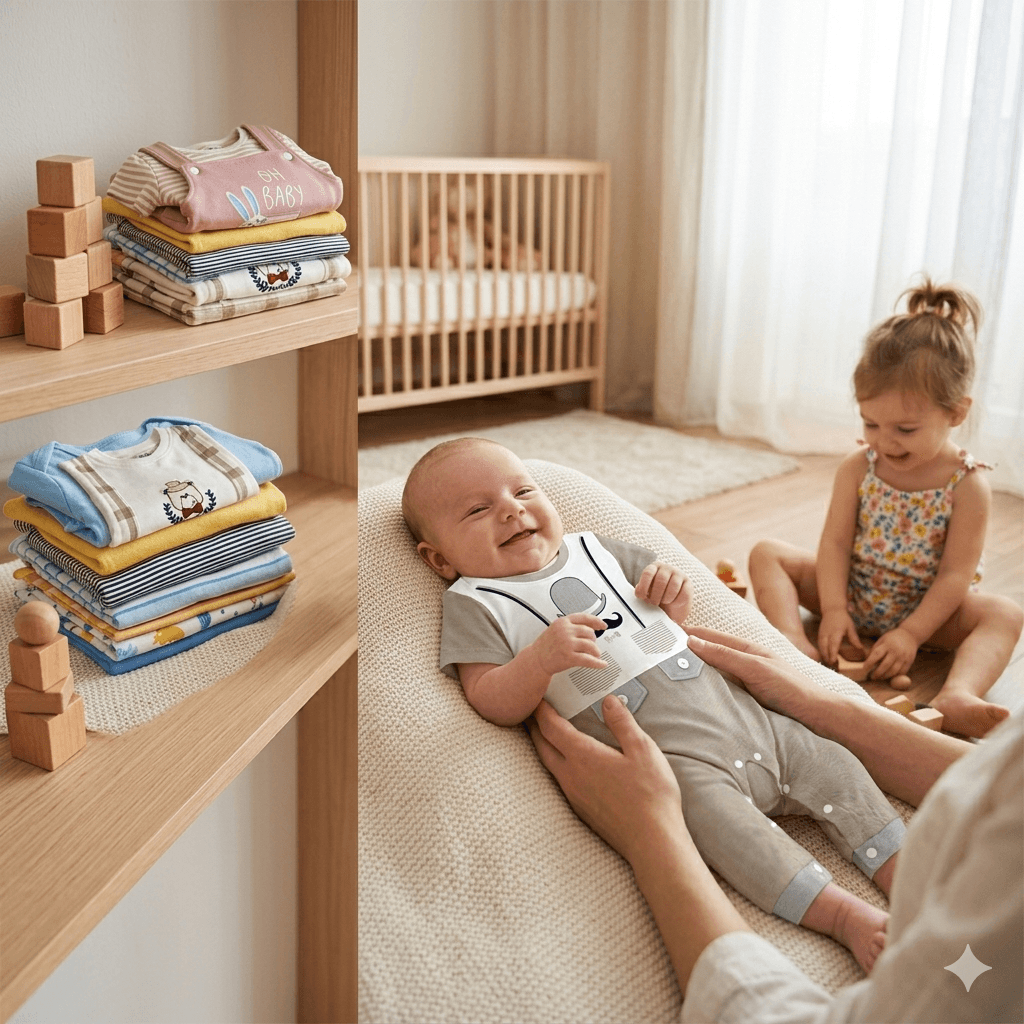
Hot, humid weather can make dressing a baby feel like a daily puzzle. Fabric matters, but so do fit, the number of layers, room temperature and how often clothes become damp. No fabric can guarantee that a baby will never develop a rash or feel overheated.
Why many parents choose cotton
Cotton is commonly used in everyday baby clothing because it can feel soft and absorb moisture. However, the feel and performance of a garment also depend on knit structure, fabric weight, finishing and construction. Check the product label rather than assuming every garment is 100% cotton.
Choose breathable, comfortable fits
For warm days, consider lightweight garments that allow movement and do not cling tightly. Check neck openings, seams, labels and closures for rough edges. Change damp clothes when needed and keep the baby's environment comfortably cool.
Read the fibre label carefully
Product descriptions may use words such as soft, breathable or premium. The fibre composition label gives more concrete information. If a garment is a cotton blend, it should be described as a blend rather than pure cotton.
Wash new clothes before first use
Follow the garment's care label and use a detergent suitable for your household's needs. Rinse thoroughly and stop using a garment if you notice irritation. Persistent or severe skin symptoms should be discussed with a qualified healthcare professional.
Warm-weather clothing checklist
- Check fibre composition and care label.
- Choose a fit that allows comfortable movement.
- Avoid unnecessary layers in hot conditions.
- Change wet or sweaty clothes promptly.
- Check your baby regularly for signs of overheating.